
De Quervain’s syndrome

DE QUERVAIN’S SYNDROME

De Quervain’s syndrome (De Quervain’s tenosynovitis) is a common cause of radial-sided wrist and thumb pain. It involves the sheath that surrounds two tendons controlling thumb movement – the abductor pollicis longus (APL) and extensor pollicis brevis (EPB). Thickening or narrowing of this sheath makes tendon gliding more difficult and leads to pain and tenderness near the base of the thumb, especially with gripping, twisting or lifting. Symptoms typically worsen with combined thumb motion and wrist deviation, and some people notice swelling or a small thickened area over the radial styloid.

The condition is particularly common in women aged 30–50 and in people whose daily activities involve repetitive thumb and wrist movements, such as childcare, manual work, racquet sports or prolonged smartphone use. It is often nicknamed “mommy’s thumb” because it frequently affects new mothers who repeatedly lift their baby with the wrist deviated and the thumb abducted. Most cases can be managed conservatively with splinting, activity modification and rehabilitation, whereas persistent or severe cases may require corticosteroid injection or surgical decompression of the first dorsal compartment, depending on medical assessment.

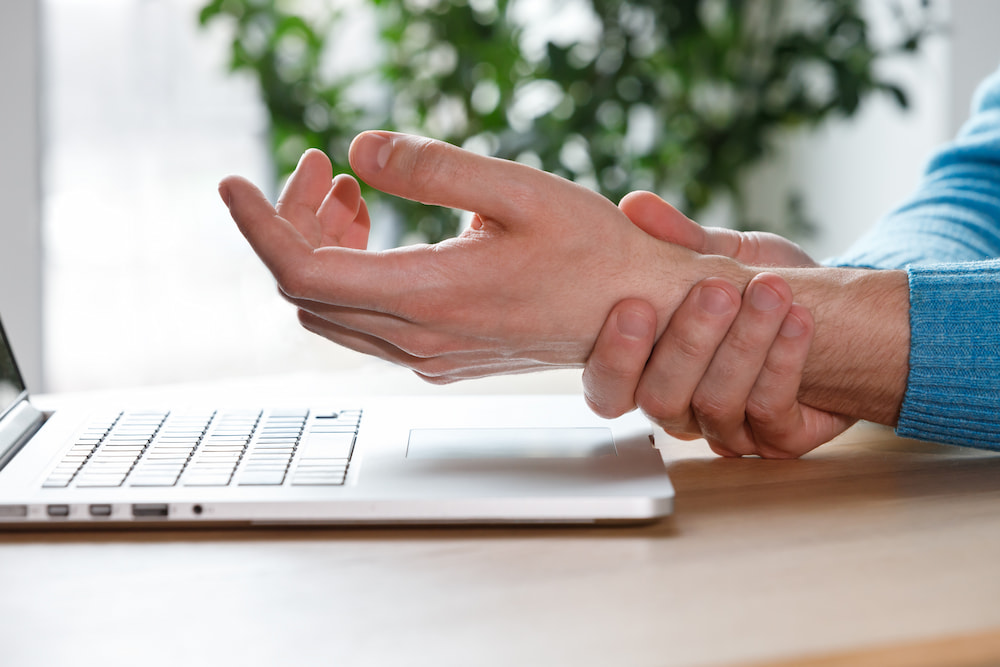
Pain at the base of the thumb

In De Quervain’s syndrome, the sheath of the APL and EPB tendons in the first dorsal extensor compartment of the wrist becomes thickened and constricted. This results in increased friction and mechanical irritation as the tendons move, producing pain over the radial styloid that is aggravated by thumb motion, gripping, pinching and ulnar deviation of the wrist. Patients often describe sharp or aching pain when lifting a baby, a pan or a shopping bag by its handle, as well as discomfort when wringing cloths, turning keys or performing repetitive smartphone or gaming actions.

Diagnosis is mainly clinical, based on focal tenderness over the first dorsal compartment and reproduction of pain with provocative tests such as the Finkelstein or Eichhoff manoeuvre. Ultrasound or MRI can be used when the presentation is atypical or symptoms do not follow the expected pattern, revealing tendon sheath thickening, fluid and synovial changes and helping to rule out differential diagnoses such as thumb CMC arthritis or intersection syndrome. Most cases follow a benign course, with many improving under appropriate education, activity modification and graded rehabilitation strategies.
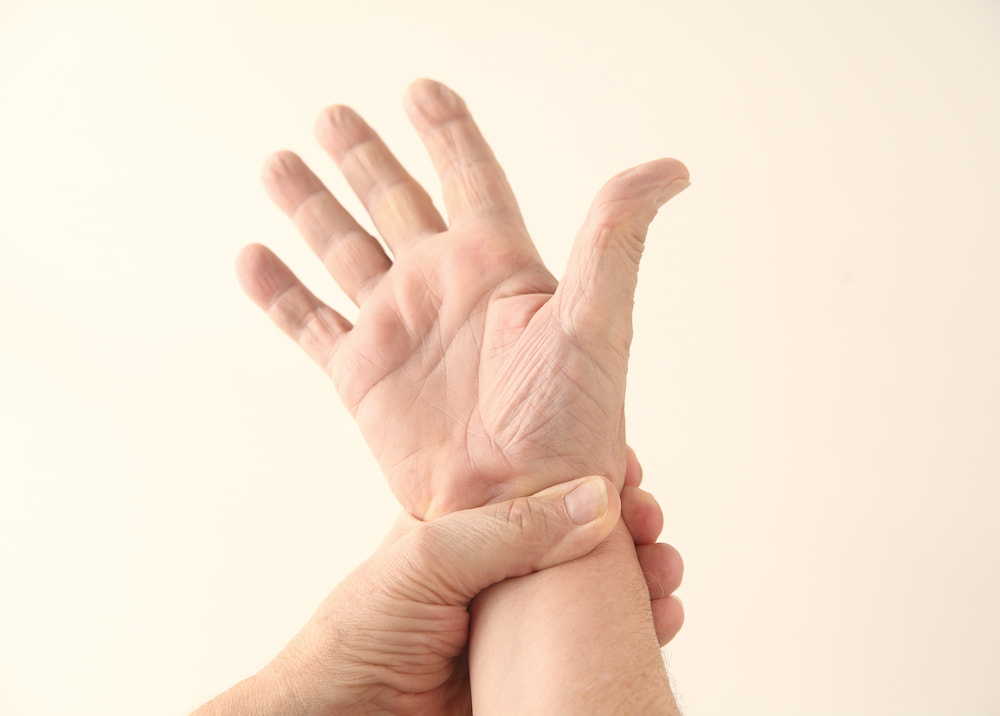
Splints, exercises and ergonomics in De Quervain’s syndrome

Conservative management of De Quervain’s syndrome focuses on reducing pain at the radial side of the wrist and allowing the involved tendons to recover, while gradually restoring their tolerance to everyday activities. A thumb-spica splint is commonly used to support the wrist and thumb, especially during aggravating tasks or at night, limiting motions that provoke symptoms. At the same time, activity modification is key: tasks involving repetitive gripping, wringing, heavy lifting by handles or prolonged smartphone and mouse use are reviewed and adjusted where possible.

Physiotherapy programmes often include gentle pain-relief strategies, controlled range-of-motion work for the wrist and thumb, tendon-gliding exercises and, in later stages, progressive strengthening of thumb and forearm muscles within a tolerable range. Practical ergonomic advice – such as how to lift a child, handle tools or sports equipment and set up a workstation – helps reduce day-to-day strain on the first dorsal compartment. When well-structured conservative care does not provide sufficient relief, the treating clinician may consider options like ultrasound-guided corticosteroid injection or surgical release; physiotherapy can then support pre- and postoperative recovery and a graded return to functional activities.

What is De Quervain’s syndrome?
It is a tenosynovitis affecting two thumb tendons on the radial side of the wrist, causing pain, tenderness and often swelling near the base of the thumb.
Why is De Quervain’s sometimes called “mommy’s thumb”?
Repeated lifting and supporting of a baby with a deviated wrist and abducted thumb can irritate the tendon sheath and trigger symptoms, especially in new mothers.
Can smartphone or gaming use make it worse?
Yes, prolonged thumb use in scrolling, typing or gaming can increase stress on the sheath and aggravate radial-sided wrist pain.
How is De Quervain’s usually diagnosed?
Primarily through history and examination, with focal tenderness over the first dorsal compartment and positive provocative tests, often without needing imaging.
How long does it usually take to improve?
Many cases improve over several months with appropriate management, though timelines vary with activity demands and individual response.
Can De Quervain’s cause permanent damage if untreated?
It is generally reversible, but long-standing, severe pain can significantly limit hand use, so persistent symptoms should be assessed.
Should I completely rest my hand?
Total rest is rarely necessary; the focus is on modifying aggravating tasks while keeping the hand moving within a comfortable range.
Is De Quervain’s linked to arthritis or injury?
It can be associated with repetitive use, minor trauma and some arthritic conditions, although no clear single cause is found in many people.