


Medial epicondylitis

MEDIAL EPICONDYLITIS

Medial epicondylitis is an overuse condition affecting the tendons that attach to the bony bump on the inside of the elbow. It primarily involves the common flexor–pronator tendon group that bends the wrist and fingers and helps turn the forearm, and presents with pain on the inner side of the elbow that may radiate down the forearm and worsens with gripping, lifting or wrist flexion. Despite its name, it is not limited to golfers; it can occur in anyone performing repetitive gripping and forearm-turning tasks, from racquet sports and throwing to manual work and keyboard use. In most cases it represents tendinopathy rather than a pure inflammatory process and responds well to conservative management including activity modification and physiotherapy.

What happens to the elbow tendons

In medial epicondylitis, repetitive loading of the flexor–pronator muscle group at their origin on the medial epicondyle leads to micro-tearing and tendinopathy rather than a purely inflammatory “tendinitis”. This results in degeneration and reduced load tolerance of the tendon, which explains why symptoms can become persistent when the tissue is not given the right balance between rest and progressive loading. Pain is typically localised to a tender spot just distal and anterior to the medial epicondyle on the inside of the elbow and is aggravated by resisted wrist flexion, forearm pronation and forceful gripping. Stiffness, local tenderness and reduced grip strength are also common.

Diagnosis is largely clinical, based on a history of overuse, focal tenderness at the medial epicondyle and reproduction of pain with specific provocative tests. Imaging such as ultrasound or MRI is reserved for atypical presentations, persistent symptoms or suspicion of other conditions like nerve entrapment or intra-articular pathology. Most patients improve with conservative treatment – education, activity modification and a structured physiotherapy programme that gradually restores tendon capacity.
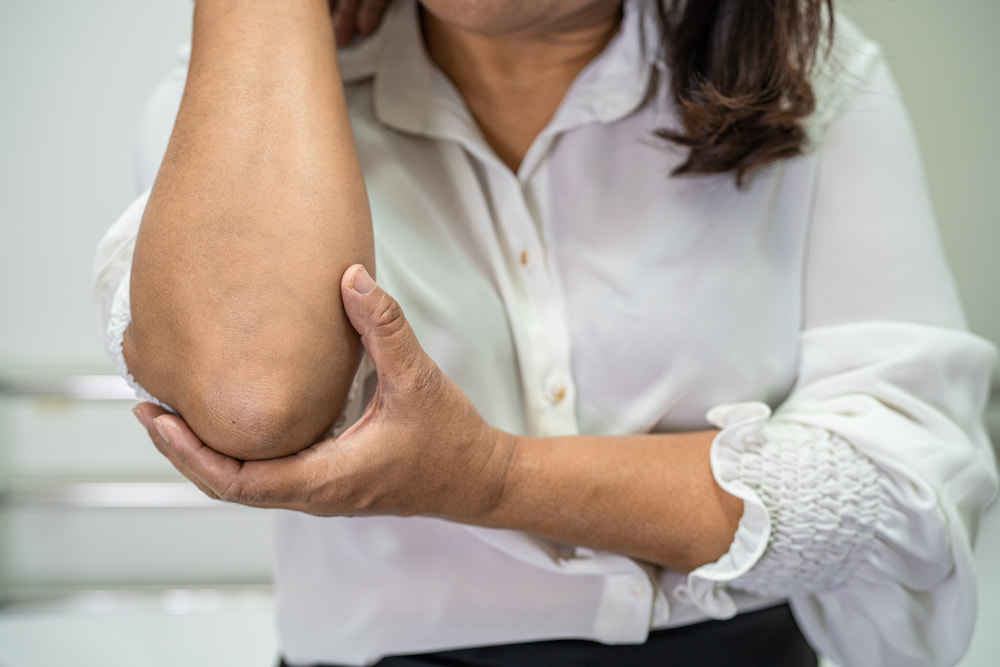
How we adjust load on the medial elbow tendon

In medial epicondylitis, physiotherapy aims to rebuild tendon capacity while keeping pain and day-to-day limitations under control. Early on, the focus is on understanding the condition and modifying tasks that heavily load the medial elbow, such as prolonged tool use, repetitive mouse/keyboard work or intense racquet and throwing practice. Gentle symptom-relief strategies, range-of-motion exercises and carefully dosed isometric contractions can help maintain activation of the flexor–pronator muscles without over-stressing the tendon.

As symptoms settle, rehabilitation progresses to graded strengthening of the wrist flexors and forearm pronators, scapular and upper-limb control work and functional drills that reflect the person’s work or sporting demands. In some cases, a counterforce strap or brace may be used for certain activities, in agreement with the treating clinician. Close guidance from a physiotherapist helps fine-tune load progression, select appropriate home exercises and plan a gradual return to higher-demand activities, reducing the risk of flare-ups or recurrence.

Where is the pain usually felt?
Pain is felt over the bony bump on the inner elbow and may radiate down the inner forearm, especially with gripping or wrist flexion.
Is it an inflammation or tendon “wear and tear”?
It is now considered mainly a tendinopathy – structural changes and micro-damage in the tendon – rather than a purely inflammatory process.
Who is more at risk of developing medial epicondylitis?
People who repeatedly grip, flex and twist the wrist, including racquet and golf players, throwers, manual workers and heavy computer users.
How is it diagnosed?
Diagnosis is usually clinical, using history and provocative tests; imaging is reserved for atypical cases or symptoms that do not improve as expected.
How long does it usually take to improve?
Recovery is typically gradual over several weeks to a few months, depending on severity, arm loading and adherence to rehabilitation.
Can I keep working if I have medial epicondylitis?
Often yes, provided heavy or repetitive tasks are modified, regular breaks are taken and your workstation is adjusted to reduce stress on the inner elbow.
Do stretching exercises help or can they make it worse?
Gentle, controlled stretching can be helpful when done correctly; aggressive stretching, however, may further irritate the tendon.
Can medial epicondylitis come back?
Yes, flare-ups or recurrences can occur if heavy, repetitive tasks are resumed too quickly without adequate strengthening and load management.