

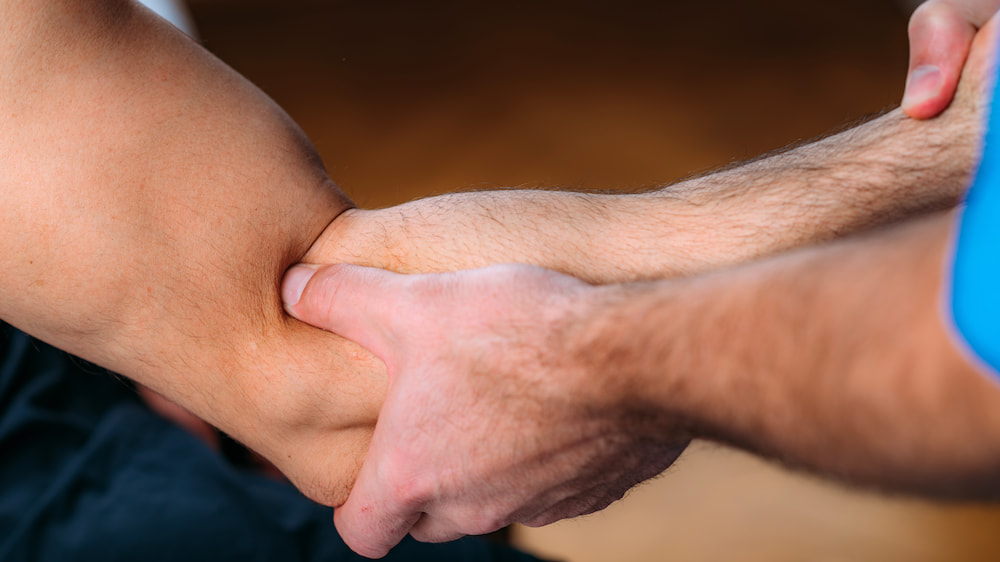
Golf elbow

GOLF ELBOW

Medial epicondylitis, also known as golf elbow, is irritation on the inner side of the elbow where tendons involved in gripping, wrist motion and forearm rotation attach. It is not only related to golf. It often affects people who lift or carry with the palm up, use tools repeatedly or keep the hand under sustained strain.
Rehabilitation aims to reduce pain in daily tasks, rebuild tendon tolerance in the forearm and support a gradual return to work, training or sport without repeated flare-ups.

Grip and forearm fatigue

Golf elbow usually feels like pain on the inner side of the elbow that can spread into the forearm. It often hurts when you grip, lift with the palm facing up, carry bags, use a screwdriver or do tasks that require a steady wrist. Simple actions like holding a mug, pressing buttons or shaking hands can also feel uncomfortable.
Over time grip may fatigue sooner, the hand can feel less reliable and you may start avoiding certain actions without noticing. This can lead to compensations at the shoulder or wrist and discomfort elsewhere because you move differently. A good plan focuses on smart activity pacing through the day, gradual strengthening and improved technique for gripping and wrist use so capacity increases without repeated flare-ups.

Grip technique

Rehabilitation starts by checking grip, forearm endurance and how you use the wrist, shoulder and shoulder blade during the tasks that trigger symptoms. Then we build a progressive plan that develops tendon tolerance with strength and control work, starting gently and moving toward movements that match your work or training demands.
We also refine grip technique and practical ways to lift or hold objects with better control so stress on the sensitive area decreases. Progress is step by step aiming for higher capacity and faster symptom settling after use.

Why does gripping hurt?
Gripping loads the tendons that attach at the inner elbow. When irritated, strong or sustained gripping can increase symptoms.
Which movements commonly aggravate it?
Lifting with the palm up, strong gripping, tool twisting and long repetitive bouts without breaks.
Why does lifting with the palm up hurt?
That position loads the muscles and tendons connected to the inner elbow more. If irritated, the movement becomes more demanding for the area.
Why does my forearm fatigue quickly?
When irritation is present, the body guards and changes how it uses the area, so fatigue shows up sooner. Progressive strengthening typically improves endurance.
When should harder exercises be added?
When basic tasks feel easier and there is no strong next day response. Then progression can be gradual and safe.
Can it come back if I rush after feeling better?
Yes, it often does if you jump back to the same volume or intensity. Staged gradual progression reduces this risk.
Is a wrist brace useful?
Sometimes it can provide short term relief for daily tasks, but it is not a standalone solution. Building tolerance with the right exercises and adjusting activity is what usually drives progress.
What can I do if a handshake hurts?
Temporarily reduce strong gripping and use a gentler grip for a short period. Progressive grip work builds tolerance so handshakes become more comfortable.