

Anterior cruciate ligament tear

ANTERIOR CRUCIATE LIGAMENT TEAR

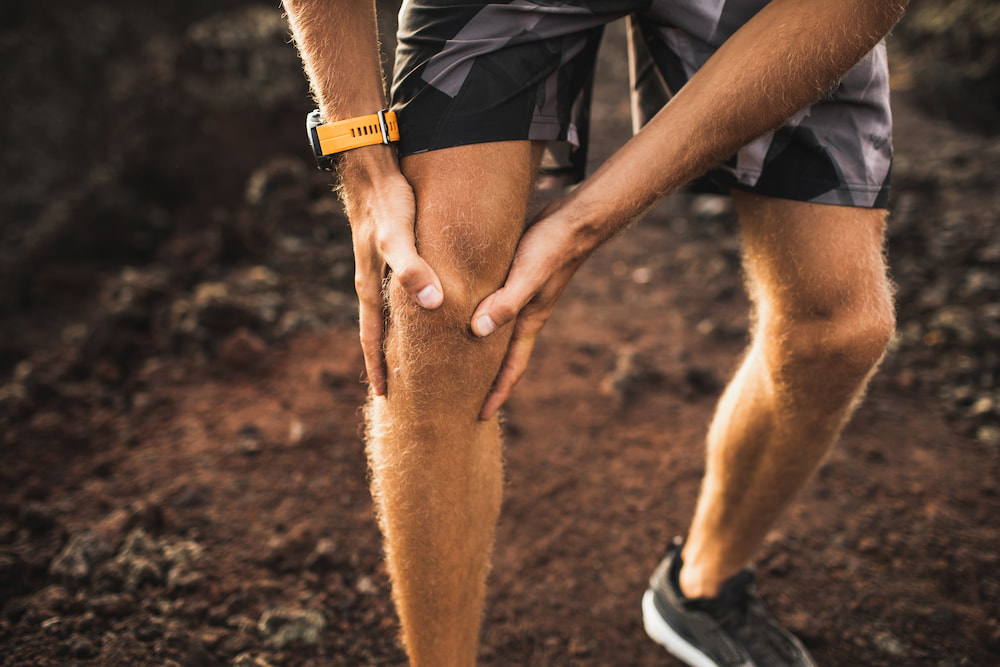
An anterior cruciate ligament (ACL) tear is one of the most common serious knee injuries, particularly in sports involving sudden changes of direction, deceleration, cutting, pivoting and jumping, such as football (soccer), basketball and skiing. The ACL is a key stabilising ligament that helps prevent the tibia from sliding too far forward relative to the femur and limits rotational instability. When the ligament tears, people often describe a sudden “pop” in the knee, followed by pain, rapid swelling and a feeling that the knee is “giving way” or cannot be trusted during twisting movements.

Most ACL tears occur without direct contact – typically during a sharp change of direction or awkward landing on a slightly flexed knee with the foot planted. These injuries are common in young, physically active individuals and athletes, but can occur at all ages. Associated damage to other knee structures, such as meniscal tears or cartilage injury, is frequent. Management options range from structured non-operative rehabilitation to surgical reconstruction, depending on knee stability, activity demands, age and personal goals. In all scenarios, comprehensive physiotherapy is central to restoring motion, strength and confidence in the knee, both before and after any surgical intervention.

The anterior cruciate ligament role in knee stability

The anterior cruciate ligament lies within the centre of the knee joint, crossing with the posterior cruciate ligament to form a “cruciate” complex that provides key restraint to anterior tibial translation and rotational movements. When the ACL is torn – most often a complete or near-complete rupture – its stabilising role is compromised and the knee may exhibit episodes of giving way, especially during cutting, pivoting or single-leg landing tasks. Acute injury is typically followed by rapid joint effusion within a few hours, pain, difficulty weight-bearing and limited flexion–extension because of swelling and discomfort. As the acute phase settles over days to weeks, instability and reduced confidence in the knee may persist, particularly under higher-demand activities.

Diagnosis is based on the mechanism of injury, the presence of a popping sensation, immediate swelling and positive findings on specific stability tests such as the Lachman and pivot-shift. MRI is often used to confirm the ACL tear and to identify associated injuries to the menisci, articular cartilage or other ligaments. The choice between non-operative management and surgical reconstruction is influenced by factors such as age, functional goals, activity level, occupational and sporting demands and the degree of instability in everyday tasks. Evidence suggests that, for some individuals, high-quality, criterion-based rehabilitation can provide satisfactory outcomes without immediate surgery, while for others – particularly those aiming to return to pivoting sports – ACL reconstruction may be recommended after shared decision-making with the orthopaedic surgeon.
The key stages

Physiotherapy plays a central role in managing ACL tears, whether the chosen pathway is non-operative rehabilitation or surgical reconstruction. In the early phase, the main goals are to control pain and swelling, gradually restore full knee flexion and extension and re-activate the quadriceps and gluteal muscles with exercises at a comfortable, safe level. Rehabilitation also focuses on movement quality during everyday tasks such as walking, stairs and sit-to-stand, along with education on how to protect the knee in daily life without fostering unnecessary fear or completely avoiding movement.

Later stages emphasise progressive strengthening of the entire lower limb (quadriceps, hamstrings, gluteals, calf), proprioception and neuromuscular control – essentially, training the knee and hip to work in a coordinated, controlled way under increasing demands. For individuals returning to pivoting and jumping sports, graded running, cutting and plyometric exercises are introduced based on objective criteria such as strength symmetry, hop performance and movement quality, rather than time alone from injury or surgery. Overall rehabilitation duration, particularly after ACL reconstruction, commonly extends to around 9–12 months before full return to high-level sport, with intermediate milestones and close communication between the orthopaedic surgeon, physiotherapist and athlete.

In simple terms, what is an ACL tear?
It is an injury to a key stabilising ligament inside the knee, usually during a twisting or landing movement, causing pain, swelling and a feeling of giving way.
Is MRI always required to diagnose an ACL tear?
MRI is very helpful, but diagnosis is based on both imaging and a detailed history and physical examination by a specialist.
How long does recovery usually take?
After anterior cruciate ligament reconstruction, full return to high-demand sport is often in the range of 9–12 months, with gradual progress through defined phases.
Why is prehabilitation before surgery important?
It helps optimise motion, strength and control so that the knee is in better condition going into surgery, which can support smoother recovery.
What does anterior cruciate ligament rehabilitation usually involve?
It includes pain and swelling control, restoring range of motion, progressive strengthening, balance/proprioception work and gradual exposure to running, cutting and jumping when appropriate.
Is recovery after ACL surgery very painful?
There is postoperative pain, but it is managed with medication and early movement and usually improves gradually as rehabilitation progresses.
Are there prevention programmes for anterior cruciate ligament injuries?
Yes, neuromuscular warm-up programmes with balance, landing and cutting drills have been shown to reduce anterior cruciate ligament injury risk in team sports.